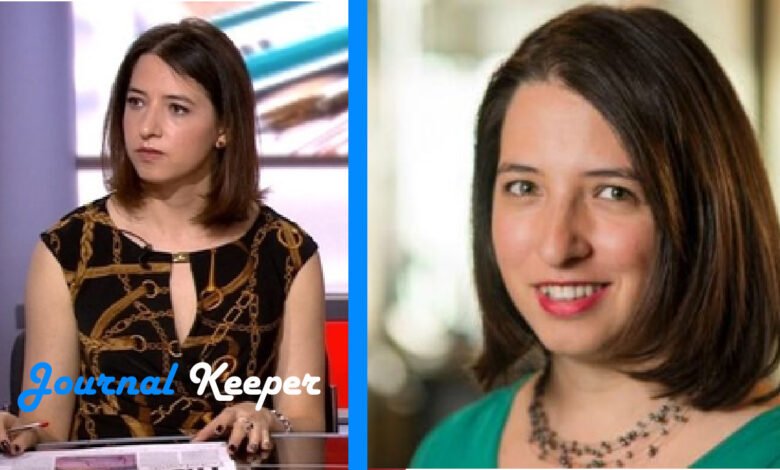
Rachel Cunliffe is widely recognized as one of the rising voices in modern British political journalism. Known for her sharp analysis and balanced commentary, she has built a reputation for explaining complex political developments in a clear and thoughtful way. As a journalist and political commentator, Rachel Cunliffe has become a familiar name to readers who follow British politics closely. Her work focuses on key issues shaping the United Kingdom, including parliamentary politics, generational change, and economic debates.
Currently serving as Associate Political Editor at the New Statesman, Rachel Cunliffe plays an important role in shaping the publication’s political coverage and analysis. The New Statesman is one of the UK’s most respected political magazines, known for its in-depth reporting and commentary on national and international affairs. Through her articles, commentary pieces, and editorial contributions, Cunliffe helps readers understand the rapidly changing political landscape.
Beyond print journalism, Rachel Cunliffe is also a regular voice across major media platforms. She frequently appears on BBC, Sky News, and Times Radio, where she provides expert insights into political developments and policy debates. These appearances have expanded her reach and allowed her to engage with a broader audience interested in politics and current affairs.
What makes Rachel Cunliffe particularly influential is her ability to combine academic depth with accessible writing. With a background in classical studies and Latin literature, she approaches modern political issues with an analytical framework shaped by history and philosophy. This unique perspective allows her to connect contemporary political challenges with historical ideas and traditions.
As a Rachel Cunliffe journalist and British political commentator, she represents a new generation of media professionals who work across digital platforms, television, and podcasts. Her growing influence reflects both her intellectual background and her skill in communicating complex ideas clearly. As political discussions continue to evolve in the UK, Rachel Cunliffe remains an important voice helping audiences understand the forces shaping modern politics.
Quick Bio
| Detail | Information |
|---|---|
| Full Name | Rachel Cunliffe |
| Profession | Journalist, Political Commentator |
| Nationality | British |
| Known For | Political Journalism and Commentary |
| Current Position | Associate Political Editor at New Statesman |
| Education | University of Cambridge |
| Degree | First-Class Degree in Classics |
| Postgraduate Degree | MPhil in Latin Literature |
| Field of Expertise | UK Politics, Public Policy, Political Analysis |
| Estimated Age | Early to Mid-30s (as of 2025) |
| Birthplace | United Kingdom |
| Marital Status | Not Publicly Disclosed |
| Parents | Not Publicly Available |
| Net Worth (Estimated) | $500,000 – $1 Million |
| Previous Roles | Deputy Editor at Reaction, Comment and Features Editor at City A.M. |
| Media Appearances | BBC, Sky News, Times Radio |
| Notable Skills | Political Analysis, Editorial Leadership, Broadcasting Commentary |
| International Experience | Taught Ancient Greek in South Korea |
| Industry | Journalism and Media |
Early Life and Background
Rachel Cunliffe grew up in the United Kingdom, where she developed a strong interest in learning and intellectual discussion from an early age. Although she has chosen to keep many details about her personal life private, it is clear that her early environment encouraged curiosity and academic exploration. Her upbringing played a key role in shaping the analytical mindset that would later define her career in journalism.
During her childhood and teenage years, Cunliffe showed a deep interest in reading, history, and political ideas. Like many future journalists and writers, she developed a habit of exploring different perspectives and asking questions about how societies function. These early interests laid the foundation for her later studies in classical literature and political thought.
Her intellectual development was influenced by subjects such as history, philosophy, and literature. These fields not only helped her understand past civilizations but also provided tools for analyzing modern political systems. By examining historical events and ancient political theories, Cunliffe gained a broader perspective on governance, democracy, and social change.
Growing up in a society with a strong democratic tradition also shaped her understanding of politics. The United Kingdom has a long history of parliamentary government, political debate, and media commentary. Exposure to this environment likely contributed to her interest in political journalism and public discourse.
Rachel Cunliffe’s early background also helped cultivate her ability to approach political issues with balance and critical thinking. Instead of viewing politics only through a partisan lens, she often focuses on the underlying structures, ideas, and societal trends that influence political decisions. This thoughtful approach is one of the reasons her commentary resonates with a wide range of readers.
Overall, her early life experiences created the intellectual foundation that later supported her academic achievements and professional success. The curiosity and analytical mindset she developed in her formative years continue to shape her work as a journalist and commentator today.
Education and Academic Achievements
Rachel Cunliffe’s academic journey reflects her deep interest in classical studies and intellectual inquiry. She pursued higher education at the University of Cambridge, one of the most prestigious universities in the world. Cambridge has long been known for producing influential thinkers, scholars, and public figures, and Cunliffe’s time there played a significant role in shaping her analytical abilities.
At Cambridge, Cunliffe studied Classics, a field that focuses on the languages, literature, history, and culture of ancient Greece and Rome. Classics is a challenging discipline that requires students to engage deeply with ancient texts and philosophical ideas. Cunliffe excelled in her studies and graduated with a first-class degree, which represents the highest academic distinction awarded to undergraduate students in the UK.
Her academic interests did not stop there. After completing her undergraduate degree, she continued her studies and pursued an MPhil in Latin Literature. This advanced degree allowed her to explore ancient texts in greater depth, analyzing how writers from the Roman world expressed ideas about politics, society, leadership, and power.
Studying classical literature also gave Cunliffe a strong understanding of how political ideas have evolved over time. Ancient Greek and Roman societies developed many concepts that still influence modern democratic systems, including debates about citizenship, governance, and public responsibility. By studying these ideas, Cunliffe gained a broader perspective on the roots of modern politics.
Her academic background has influenced her work as a journalist in several ways. First, it encourages careful analysis rather than quick conclusions. Classical scholarship requires patience, critical reading, and attention to detail—skills that translate well into political reporting and commentary.
Second, her knowledge of history and philosophy helps her place current political events in a wider context. Instead of focusing only on immediate news developments, Cunliffe often explores the deeper forces that shape political behavior and public opinion.
Finally, her education demonstrates the value of combining humanities scholarship with journalism. In an age of rapid news cycles and digital media, Rachel Cunliffe’s academic foundation helps bring intellectual depth and historical awareness to modern political commentary.
Teaching Experience in South Korea
One of the most distinctive aspects of Rachel Cunliffe’s early professional journey is her experience teaching abroad. Before fully entering the world of journalism, she spent time teaching Ancient Greek in South Korea. This unusual and impressive experience highlights both her academic expertise and her willingness to explore different cultural environments.
Teaching ancient languages requires a deep understanding of classical texts and strong communication skills. Ancient Greek is a complex language that forms the foundation of many important philosophical and historical works. By teaching this subject, Cunliffe demonstrated both scholarly knowledge and the ability to explain difficult ideas clearly—skills that later became essential in her journalism career.
Living and working in South Korea also provided valuable international exposure. Experiencing life in another country allows individuals to see political and cultural systems from a broader perspective. For Cunliffe, this experience likely expanded her understanding of global society and the ways different nations approach education, governance, and public life.
International teaching also helps develop communication skills across cultures. Explaining classical texts to students from different backgrounds requires clarity, patience, and adaptability. These qualities are also important for journalists who aim to communicate complex ideas to diverse audiences.
The cultural exposure gained from living in South Korea may have also influenced Cunliffe’s broader worldview. Being immersed in another culture encourages openness to new ideas and perspectives. It also highlights how historical traditions and modern systems interact differently in various parts of the world.
Although this period of her life was relatively brief compared to her journalism career, it added a unique dimension to her professional background. Few political commentators have experience teaching ancient languages abroad, and this background reinforces Cunliffe’s intellectual credibility.
Overall, her teaching experience reflects a commitment to education, global awareness, and intellectual engagement. These qualities continue to influence her work as a political journalist and commentator.
Rachel Cunliffe Journalism Career
Rachel Cunliffe eventually transitioned from academia into journalism, bringing with her a strong analytical background and a deep understanding of history and political ideas. This shift allowed her to apply her academic skills to real-world political discussions and contemporary public debates.
Entering the field of journalism can be challenging, especially in a competitive media environment. However, Cunliffe’s intellectual training and communication skills helped her establish herself quickly. Her ability to analyze complex issues and present them clearly made her well-suited for political commentary.
Early in her career, Cunliffe began writing about political developments and policy discussions. Her articles often focused on explaining political dynamics rather than simply reporting events. This approach helped readers understand the broader implications of political decisions and government actions.
Her academic background gave her a distinctive perspective compared with many journalists. Instead of focusing only on daily political headlines, Cunliffe often examines the underlying ideas, institutions, and historical trends shaping modern politics. This analytical style has become one of her defining characteristics as a writer.
Over time, her work attracted attention within the British media industry. Editors and readers recognized her ability to combine thoughtful analysis with accessible writing. This combination allowed her to move into increasingly influential roles within journalism.
As her career progressed, Cunliffe became involved with several respected media organizations, where she contributed political commentary and editorial leadership. Each stage of her professional journey helped expand her influence and refine her approach to journalism.
Today, Rachel Cunliffe is regarded as one of the notable voices in British political commentary. Her career demonstrates how intellectual curiosity, academic training, and clear communication can come together to create impactful journalism.
Role at Reaction as Deputy Editor
One of the early milestones in Rachel Cunliffe’s journalism career was her role as Deputy Editor at Reaction, a political commentary platform known for thoughtful analysis and opinion pieces. Reaction was created as a digital media outlet that focused on current affairs, politics, and cultural discussions, offering commentary from a range of perspectives.
As Deputy Editor, Cunliffe was responsible for helping guide the editorial direction of the platform. Editorial roles require both leadership and strong journalistic judgment. In this position, she contributed to shaping the topics covered by the publication and ensuring that articles maintained a high standard of analysis and clarity.
Her responsibilities included editing opinion pieces, coordinating with contributors, and writing her own commentary on political developments. Working in a fast-paced digital media environment also required staying updated with rapidly changing news events and responding quickly with thoughtful analysis.
During her time at Reaction, Cunliffe further developed her voice as a political commentator. She wrote about issues affecting the UK political system, economic policy debates, and shifts within political parties. These topics required careful research and an understanding of how political institutions function.
The role also allowed her to collaborate with other journalists and commentators, expanding her professional network within the media industry. Collaboration is an important part of journalism, especially in editorial positions where different perspectives contribute to the overall discussion.
Her work at Reaction helped establish her reputation as a serious political analyst. The experience she gained in editorial leadership and commentary prepared her for future positions in larger and more influential media organizations.
Overall, this stage of her career played an important role in building her professional credibility and demonstrating her ability to contribute meaningfully to political discourse.
Career at City A.M.
After her work at Reaction, Rachel Cunliffe continued to expand her influence in journalism by joining City A.M., a well-known London-based financial and business newspaper. At City A.M., she served as Comment and Features Editor, a role that allowed her to combine political analysis with discussions about economics and public policy.
City A.M. focuses on financial markets, economic policy, and business news, but it also provides commentary on the political decisions that affect economic systems. Cunliffe’s role required her to oversee opinion pieces and feature articles related to these topics. This position helped her develop expertise in the intersection between politics and economics.
As Comment and Features Editor, Cunliffe worked with writers and analysts who contributed articles on policy debates, government decisions, and market developments. She played a key role in shaping the editorial voice of the publication’s opinion section.
Her own writing during this period often addressed how political choices influence economic outcomes. For example, government regulations, taxation policies, and international trade agreements can all affect financial markets and business environments. By examining these connections, Cunliffe helped readers understand how political actions impact everyday economic life.
This role also strengthened her editorial leadership skills. Managing opinion content requires careful consideration of different viewpoints while maintaining journalistic standards and factual accuracy.
Working at City A.M. broadened Cunliffe’s professional experience and expanded her understanding of economic policy debates. The combination of political and financial journalism helped prepare her for more prominent roles in the media industry.
Rachel Cunliffe at the New Statesman
In January 2021, Rachel Cunliffe joined the New Statesman, marking a major step forward in her journalism career. The New Statesman is one of the United Kingdom’s most influential political magazines, known for its detailed analysis of politics, culture, and public policy.
Cunliffe initially joined the publication as Deputy Online Editor, a role that involved overseeing digital content and contributing to political reporting and commentary. Digital journalism has become increasingly important in the modern media landscape, and her position placed her at the center of the magazine’s online strategy.
Through her writing and editorial contributions, Cunliffe quickly became an important voice within the publication. Her articles often focus on explaining complex political developments, such as parliamentary debates, policy proposals, and shifting public attitudes toward government institutions.
Because of her strong analytical skills and thoughtful commentary, Cunliffe was later promoted to Associate Political Editor. In this role, she plays a key part in covering UK political affairs and shaping how the publication reports on major political issues.
Her work at the New Statesman includes written articles, opinion pieces, and participation in podcasts and discussions related to British politics. The publication’s audience includes policymakers, academics, journalists, and readers interested in thoughtful political analysis.
Through her contributions, Cunliffe helps readers understand the broader context behind political events. Instead of focusing only on immediate headlines, her analysis often explores the deeper structural forces influencing political decisions.
Her role at the New Statesman has significantly increased her visibility and influence within British political journalism.
Media Appearances and Broadcasting Career
In addition to her writing, Rachel Cunliffe has built a strong presence in broadcast media. She regularly appears on television and radio programs where political analysts discuss current events and policy debates.
Her appearances on BBC programs allow her to contribute insights on political developments affecting the UK government and parliament. The BBC remains one of the most widely watched and trusted broadcasters in the country, making these appearances an important platform for political commentary.
Cunliffe has also appeared on Sky News, where political discussions often focus on breaking news and ongoing policy debates. Television appearances require the ability to communicate ideas quickly and clearly, especially when discussing complex political topics with limited time.
Another platform where Cunliffe frequently contributes is Times Radio, which features interviews, discussions, and commentary on current affairs. Radio discussions provide opportunities for more detailed conversations about policy issues and political trends.
In addition to traditional broadcasting, Cunliffe also participates in podcasts related to political journalism. Podcasts have become an increasingly important medium for in-depth discussions about news and public affairs.
Her involvement in multiple media formats demonstrates her versatility as a journalist. Whether writing articles, speaking on television, or participating in podcasts, Cunliffe maintains a clear and thoughtful approach to political analysis.
These media appearances have helped expand her audience beyond print readers and establish her as a recognizable voice in British political commentary.
Rachel Cunliffe Writing Style and Analytical Approach
One of the defining characteristics of Rachel Cunliffe’s work is her writing style. Her articles are known for being clear, balanced, and analytical, making complex political topics easier for readers to understand.
Rather than relying on dramatic language or exaggerated claims, Cunliffe focuses on careful explanation and evidence-based reasoning. This approach helps readers gain a deeper understanding of political issues without being overwhelmed by technical details.
Her academic background in classical studies often influences the way she analyzes modern politics. By studying ancient political systems and philosophical debates, she developed an understanding of how political ideas evolve over time. This perspective allows her to connect contemporary events with broader historical themes.
Cunliffe also has a talent for breaking down complicated political processes into simple explanations. Parliamentary procedures, legislative proposals, and policy debates can be difficult for many people to follow. Her writing helps readers navigate these topics by presenting information in a logical and accessible way.
Another important aspect of her style is balance. While many political commentators focus heavily on partisan viewpoints, Cunliffe often aims to examine issues from multiple perspectives. This balanced approach helps create thoughtful discussions rather than purely ideological debates.
Overall, her writing style reflects a commitment to clarity, intellectual honesty, and careful analysis. These qualities have contributed significantly to her reputation as a respected political journalist.
Major Political Topics Rachel Cunliffe Covers
Rachel Cunliffe’s work focuses on several important areas within British politics. Her commentary often explores the forces shaping government policy, public opinion, and political institutions.
One major topic she frequently examines is Brexit and post-Brexit politics. The United Kingdom’s decision to leave the European Union created significant political and economic changes, and journalists like Cunliffe have helped explain these developments to the public.
She also writes about parliamentary dynamics, including how political parties operate within the House of Commons and how legislative decisions are made. Understanding parliamentary procedures is essential for analyzing how government policies are created and implemented.
Another topic she often explores is generational political change. Younger generations have different political priorities and concerns compared with older voters. Cunliffe has written about how millennials and Generation Z approach issues such as economic opportunity, social justice, and public services.
Economic policy is another key area of her analysis. Government decisions related to taxation, spending, and regulation can have significant effects on the national economy. By examining these policies, Cunliffe helps readers understand the relationship between politics and economic outcomes.
Her work also touches on cultural debates and social issues that influence political discussions. These topics include education policy, media trends, and broader societal changes affecting public life.
By covering a wide range of political themes, Cunliffe provides readers with a comprehensive understanding of the issues shaping contemporary British politics.
Influence on British Political Journalism
Rachel Cunliffe represents a new generation of political journalists who combine traditional reporting with digital media engagement. Her work reflects the changing nature of journalism in an era where audiences consume news through multiple platforms.
Her analytical approach has contributed to more thoughtful discussions about politics. Rather than focusing only on political personalities or party conflicts, she often examines the deeper structures and ideas that influence policy decisions.
Cunliffe’s ability to communicate complex political information in clear language has also made political journalism more accessible to wider audiences. Readers who may not have formal training in politics or economics can still understand the topics she discusses.
Her presence across different media formats—including written journalism, television, radio, and podcasts—demonstrates how modern journalists engage with audiences in multiple ways.
As political debates become more complex and polarized, journalists like Cunliffe play an important role in encouraging informed discussion and critical thinking.
Rachel Cunliffe Age
Rachel Cunliffe has not publicly shared her exact birth date, and many journalists prefer to keep such personal details private. Based on her academic and professional timeline, however, she is generally believed to be in her early to mid-30s.
Despite being relatively young in the field of political commentary, Cunliffe has already achieved significant professional milestones. Her career progression—from editorial roles at smaller publications to a senior position at the New Statesman—demonstrates her growing influence within British media.
Her success at a relatively early stage of her career reflects both her intellectual background and her dedication to political analysis. Younger journalists often bring new perspectives to political discussions, especially when examining how generational changes affect political attitudes.
As her career continues to develop, Cunliffe’s influence in political journalism is likely to grow even further.
Rachel Cunliffe Family and Personal Life
Rachel Cunliffe is known for maintaining a high level of privacy regarding her personal life. Unlike some public figures, she rarely discusses details about her family, relationships, or private experiences in the media.
This choice is common among journalists who prefer to keep their professional work separate from their personal lives. Maintaining privacy allows them to focus attention on their reporting and analysis rather than on personal matters.
As a result, there is limited publicly available information about her parents, siblings, or marital status. What is clear, however, is that her professional achievements reflect a strong intellectual background and dedication to journalism.
Her decision to keep her personal life private has not affected her influence as a political commentator. Readers and viewers are primarily interested in her insights into political developments and policy debates.
Rachel Cunliffe Net Worth
Estimating the net worth of journalists can be difficult because financial information is rarely made public. However, based on her career roles and media appearances, Rachel Cunliffe’s estimated net worth is believed to fall somewhere between $500,000 and $1 million.
Her income likely comes from several sources. Her primary earnings come from her role as Associate Political Editor at the New Statesman, where she contributes articles and editorial work.
Additional income may come from broadcast appearances, speaking engagements, and freelance writing for other publications. Experienced political commentators are often invited to contribute opinion pieces or participate in discussions across multiple media platforms.
Although financial estimates can vary, it is clear that Cunliffe has built a stable and successful career in journalism.
Rachel Cunliffe Wikipedia and Online Presence
Despite her growing influence in British political journalism, Rachel Cunliffe currently does not have a dedicated Wikipedia page. However, her work is widely referenced across various media platforms and political discussions.
She is frequently cited in articles, interviews, and media panels related to British politics. Her contributions to the New Statesman and her appearances on television and radio programs have significantly increased her visibility.
As her career continues to develop, it would not be surprising to see more comprehensive online profiles and biographies documenting her work.
Social Media and Public Engagement
Like many modern journalists, Rachel Cunliffe engages with audiences through social media platforms. These platforms allow journalists to share articles, comment on current events, and interact directly with readers.
Her social media presence often focuses on discussing political developments, sharing insights from her articles, and engaging with ongoing public debates.
This direct communication with audiences helps journalists maintain transparency and encourages open discussions about political issues.
What Makes Rachel Cunliffe Unique in Journalism
Several factors make Rachel Cunliffe stand out in the field of political journalism.
Her classical academic background provides intellectual depth that is uncommon in modern media commentary. Studying ancient literature and philosophy has shaped her analytical approach to political issues.
She also demonstrates strong critical thinking skills, allowing her to examine political developments from multiple perspectives.
Another important factor is her balanced approach to political commentary. Rather than focusing solely on partisan viewpoints, she aims to provide thoughtful analysis that encourages informed discussion.
Finally, her versatility across media platforms—including print journalism, television, radio, and podcasts—allows her to reach a wide audience.
Future Prospects and Career Outlook
Rachel Cunliffe’s career trajectory suggests that she will continue to play an important role in British political journalism. As political debates evolve and media platforms continue to expand, journalists who combine intellectual depth with clear communication will remain highly valuable.
In the future, Cunliffe may take on even greater editorial responsibilities within major publications or explore new forms of media engagement. Some journalists eventually publish books or long-form political analysis, and her academic background would make her well-suited for such projects.
Her ability to explain complex political issues in an accessible language ensures that her work will continue to resonate with readers and viewers interested in public affairs.
Conclusion
Rachel Cunliffe has established herself as an important voice in contemporary British political journalism. Through her work at the New Statesman, her media appearances, and her thoughtful analysis of political issues, she has contributed significantly to public understanding of UK politics.
Her unique combination of classical academic training and modern media engagement allows her to approach political commentary with depth and clarity. By connecting historical ideas with current events, she provides readers with a broader perspective on political developments.
As the political landscape continues to change, journalists like Rachel Cunliffe will remain essential in helping audiences understand the challenges and opportunities facing modern democratic societies. Her career reflects the value of thoughtful analysis, intellectual curiosity, and clear communication in the world of journalism.
FAQs About Rachel Cunliffe
1. Who is Rachel Cunliffe?
Rachel Cunliffe is a British political journalist and commentator known for her insightful analysis of UK politics. She currently works as the Associate Political Editor at the New Statesman. Through her writing and media appearances, she helps audiences understand complex political developments and policy debates.
2. What does Rachel Cunliffe do at the New Statesman?
Rachel Cunliffe serves as the Associate Political Editor at the New Statesman, one of the UK’s leading political magazines. In this role, she writes political analysis, covers major government and parliamentary issues, and contributes to editorial discussions. She also participates in podcasts and media discussions related to current political events.
3. Where did Rachel Cunliffe study?
Rachel Cunliffe studied at the University of Cambridge, where she earned a first-class degree in Classics. She later completed an MPhil in Latin Literature, focusing on ancient texts and classical political ideas. Her academic background strongly influences her analytical approach to modern political journalism.
4. Has Rachel Cunliffe appeared on television or radio?
Yes, Rachel Cunliffe frequently appears on major British media platforms. She has contributed political commentary on outlets such as the BBC, Sky News, and Times Radio. These appearances allow her to discuss political developments and share expert insights with a wider audience.
5. What topics does Rachel Cunliffe usually write about?
Rachel Cunliffe mainly writes about UK politics, including parliamentary debates, government policy, and political party dynamics. She also explores broader issues such as generational political change, economic policy, and social debates. Her articles aim to explain how political decisions affect society and public life.
Read More: Lucy Bolam: The Untold Story of James Bolam’s Private Daughter
For More Informational And Amazing Stories Journal Keeper