Acryldach is becoming a widely discussed roofing solution in modern construction because it combines transparency, durability, and modern design in one material. The word Acryldach comes from two German words: “Acryl,” which refers to acrylic plastic materials, and “Dach,” meaning roof. Together, the term describes roofing systems made from acrylic materials such as PMMA (Polymethyl Methacrylate) sheets or liquid acrylic roof coatings. These roofing systems are designed to allow natural light to pass through while still protecting buildings from rain, wind, and harsh sunlight.
Many architects, homeowners, and builders search for Acryldach solutions because modern buildings increasingly require lightweight, energy-efficient, and visually appealing roofing materials. Transparent roofing for patios and skylights, greenhouse roofing that supports plant growth, and waterproof coatings for flat roofs are all common uses of acrylic roofing technology. Acryldach materials also offer a combination of excellent light transmission, long-term durability, weather resistance, and flexible design options, making them suitable for both residential and commercial structures.
In this detailed guide, we will explore everything about Acryldach roofing. The article explains its meaning and origin, the materials used to produce it, different types of acrylic roofing systems, their advantages, comparisons with glass and polycarbonate roofing, installation methods, maintenance tips, cost factors, and the most common applications in modern construction.
Quick Definition of Acryldach
Acryldach is a roofing system made from acrylic materials, primarily PMMA (Polymethyl Methacrylate), which is a strong and transparent thermoplastic often used as a lightweight alternative to glass. The Acryldach panels or coatings create roofs that allow natural light while protecting buildings from weather conditions.
Acryldach is a transparent or translucent roofing solution made from acrylic (PMMA) sheets or coatings that provide durability, weather resistance, and natural light transmission, commonly used in skylights, patios, pergolas, greenhouses, and commercial structures.
Meaning and Origin of the Word Acryldach
The term Acryldach has a simple linguistic origin that clearly reflects its function in construction.
The first part of the word, “Acryl,” refers to acrylic materials. Acrylic is a synthetic plastic derived from polymethyl methacrylate (PMMA), which is known for its transparency, durability, and resistance to weather conditions. Acrylic materials are widely used in construction, lighting systems, protective screens, and roofing panels.
The second part of the word, “Dach,” comes from the German language and simply means roof. When these two words are combined, the term describes a roofing system made from acrylic materials.
In modern architecture and roofing industries, the term Acryldach has evolved to describe several different acrylic roofing solutions. It may refer to clear acrylic roof panels, corrugated acrylic sheets, multiwall insulation panels, or liquid acrylic membranes used for waterproofing roofs. These materials allow buildings to receive natural light while maintaining protection against weather and environmental conditions.
Materials Used in Acryldach Roofing Systems
The performance of an Acryldach roof depends largely on the materials used in its construction. The most important material used in acrylic roofing systems is PMMA (Polymethyl Methacrylate).
PMMA is a transparent thermoplastic often known by commercial names such as plexiglass or acrylic glass. It has excellent optical clarity and can transmit a large amount of visible light. Because of this property, PMMA is often used in situations where natural light is desired, but traditional glass would be too heavy or fragile.
One of the major advantages of PMMA is its UV resistance. Unlike many other plastics, acrylic panels maintain their clarity even after long exposure to sunlight. This prevents yellowing and allows the roof to remain visually clear for many years.
Acryldach materials are also designed to be impact-resistant and weather-durable. They can withstand rain, wind, and temperature changes while maintaining their structure. In addition, acrylic sheets are much lighter than glass, which reduces the structural load placed on buildings.
Modern Acryldach products often include additional technologies that improve performance. UV stabilizers protect the panels from sunlight damage, while anti-scratch coatings reduce surface damage during cleaning or maintenance. Some panels include anti-fog coatings that prevent condensation buildup, which is particularly useful in greenhouses. Certain advanced acrylic roofing materials also feature infrared reflective coatings that help reduce heat buildup inside buildings.
Types of Acryldach Roofing Systems
Acryldach roofing systems are available in several forms, each designed for different construction needs.
One of the most common types is acrylic roof panels made from flat PMMA sheets. These panels are transparent and are frequently used in skylights, patio covers, and balcony roofs. They provide maximum light transmission while protecting the space below from rain and debris.
Another widely used option is corrugated acrylic sheets. These sheets have a wave-shaped structure that increases their strength and rigidity. Corrugated acrylic panels are often used in industrial buildings, warehouses, sheds, and agricultural structures because they are easy to install and highly resistant to impact.
A third type is multiwall or twinwall acrylic panels. These panels contain internal hollow chambers that improve insulation and structural strength. Because of this design, multiwall panels are commonly used in greenhouses, winter gardens, and energy-efficient buildings where temperature control is important.
Finally, liquid Acryldach roof coatings are used mainly for waterproofing flat or low-slope roofs. These elastomeric acrylic membranes are applied directly to the roof surface. After curing, they form a seamless waterproof layer that protects the structure from leaks, sunlight, and thermal expansion.
Key Features and Benefits of Acryldach Roofing
One of the main reasons Acryldach roofing is gaining popularity is its combination of performance and visual appeal.
Acryldach roofs are known for their durability and long lifespan. High-quality acrylic panels can last between 25 and 30 years when properly installed and maintained. They are resistant to harsh weather conditions such as strong winds, heavy rain, hail, and sunlight.
Another major benefit is light transmission. Acrylic panels can transmit up to 90–92 percent of natural light, which allows buildings to remain bright during daytime hours. This reduces the need for artificial lighting and can lower energy consumption.
The lightweight construction of acrylic panels is another important advantage. Compared to glass roofing systems, acrylic sheets weigh significantly less. This reduces structural stress on the building and simplifies installation.
Acryldach roofing also provides excellent weather resistance. Acrylic materials can withstand temperature changes, moisture, and UV radiation without significant degradation.
From an energy perspective, Acryldach systems improve energy efficiency. Natural daylight reduces electricity usage, while reflective coatings can reduce heat absorption.
Finally, acrylic roofing requires minimal maintenance. Unlike metal roofing materials, acrylic does not rust or corrode. Cleaning usually involves simple washing with mild soap and water.
Acryldach vs Other Roofing Materials
When choosing roofing materials, many people compare Acryldach with other commonly used options.
Compared with polycarbonate roofing, acrylic panels provide better optical clarity and maintain transparency for longer periods. Polycarbonate is stronger in terms of impact resistance, but it may discolor over time, while acrylic remains clearer.
When compared to glass roofing, Acryldach panels are significantly lighter and less fragile. Glass roofs can break into dangerous fragments when damaged, while acrylic panels are more resistant to shattering.
In comparison with fiberglass roofing, acrylic materials provide better flexibility and long-term durability. Fiberglass can become brittle and crack after years of exposure to weather conditions.
Compared with metal roofing, Acryldach has the advantage of light transmission. Metal roofs block sunlight completely, while acrylic roofing allows natural daylight to enter the building.
Common Applications of Acryldach
Acryldach roofing systems are used in many different types of structures.
In residential buildings, acrylic roofing is commonly used for patios, pergolas, balconies, carports, and skylights. These installations allow homeowners to enjoy outdoor spaces while remaining protected from the weather.
Commercial buildings also benefit from Acryldach systems. Mall entrances, restaurant outdoor seating areas, office atriums, and canopies often use acrylic panels to create bright and visually appealing spaces.
In industrial settings, Acryldach panels are frequently used for warehouse skylights and factory roofing. These installations reduce electricity usage by allowing natural daylight to illuminate large interior spaces.
Agricultural facilities also rely on acrylic roofing. Greenhouses, hydroponic farms, and plant nurseries use transparent panels to provide plants with consistent sunlight while maintaining protection from external weather.
Public infrastructure projects may also include acrylic roofing systems. Bus stops, walkways, and stadium covers often use acrylic panels because they combine strength with visibility.
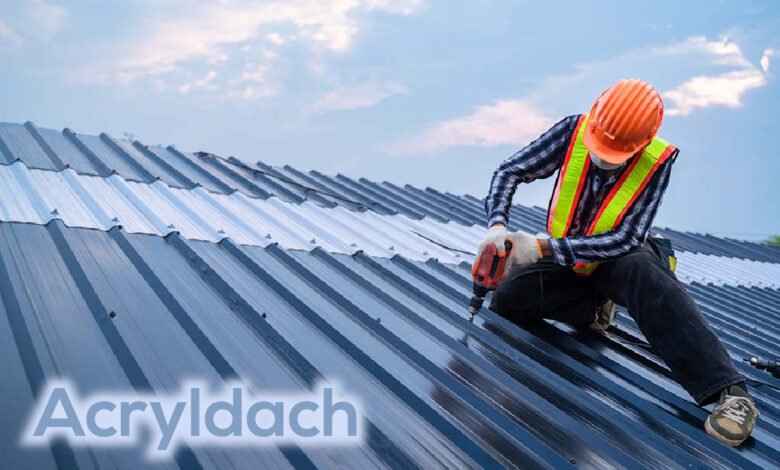
Acryldach Installation Process
Installing an Acryldach roof requires careful planning and precise installation techniques.
The process begins with planning and measurement. The roof slope is calculated to ensure proper water drainage, and panel dimensions are determined according to the building design.
Next, the framework is prepared. The supporting structure is usually built from aluminum, steel, or treated wood. The frame must be strong enough to support the acrylic panels while allowing for thermal movement.
After the frame is ready, the panels are cut to size. Acrylic sheets are typically cut using fine-tooth saws designed for plastic materials.
The panels are then fastened to the structure using screws with rubber washers. These washers prevent water from entering around the screws and protect the panel surface. It is important to allow space for thermal expansion because acrylic materials expand slightly when temperatures rise.
The next step involves sealing and waterproofing. Silicone sealants and gaskets are applied at joints and edges to prevent water leaks.
Finally, a complete inspection is performed to ensure the panels are properly aligned and that drainage systems function correctly.
Maintenance and Care of Acryldach Roofs
Although Acryldach roofs require little maintenance, regular care can extend their lifespan.
Cleaning is usually simple. Panels should be washed with mild soap and water using a soft cloth or sponge. This prevents dirt buildup and maintains transparency.
To prevent scratches, abrasive cleaners and rough brushes should be avoided. Ammonia-based cleaning chemicals should also be avoided because they can damage the acrylic surface.
It is also important to inspect seals and fasteners periodically. Joints should remain tight and waterproof.
If minor damage occurs, acrylic adhesives or sealants can repair small cracks or leaks. Larger damage may require replacement of the affected panel.
Acryldach Cost and Pricing Factors
The cost of an Acryldach roof depends on several factors. These include the thickness of the panels, panel type, UV coatings, brand quality, and installation labor.
Generally, acrylic roofing is less expensive than glass roofing but slightly more expensive than basic metal roofing sheets. Its cost is often similar to high-quality polycarbonate roofing materials.
Despite the initial cost, Acryldach roofs often provide a strong return on investment. Reduced lighting costs, long lifespan, and minimal maintenance expenses contribute to long-term savings.
Leading Acryldach Brands and Manufacturers
Several manufacturers produce high-quality acrylic roofing products.
Well-known brands include ACRYLITE®, Stabilit / Acrylit, Acrylabs, and Palram Industries. These companies manufacture a range of acrylic roofing materials, including corrugated panels, PMMA sheets, and roof coating systems.
Many of these manufacturers follow international quality standards to ensure durability and performance.
Building Codes and Standards for Acryldach
Construction materials must follow specific safety and performance standards. Acryldach roofing systems are often designed according to guidelines such as the International Building Code (IBC).
Testing standards from organizations like ASTM help ensure that roofing panels meet requirements for impact resistance, weather durability, and structural performance.
In addition, organizations such as the Roof Coatings Manufacturers Association (RCMA) help establish guidelines for roof coating technologies.
Using certified materials ensures safety, durability, and warranty protection.
Advantages and Limitations of Acryldach
Acryldach roofing provides many advantages, including high light transmission, modern design, strong durability, and energy efficiency. These benefits make it a popular option for buildings that require natural daylight and lightweight construction.
However, there are also some limitations. Acrylic surfaces can be sensitive to scratches, and thermal expansion must be considered during installation. Acrylic panels may also cost more than basic roofing materials and may not match the extreme impact resistance of polycarbonate.
Understanding both advantages and limitations helps builders choose the best roofing system for their needs.
Sustainability and Environmental Impact
Acryldach materials can contribute to sustainable construction practices. Many PMMA materials are recyclable, which reduces environmental waste.
Because acrylic panels allow natural daylight to enter buildings, they help reduce electricity consumption for lighting. Their long lifespan also reduces the need for frequent replacement.
These characteristics support green building certifications such as LEED and BREEAM, which encourage energy-efficient construction.
Real-World Examples of Acryl dach Projects
Acryldach roofing is used in many modern construction projects.
Residential buildings often use acrylic skylights to bring daylight into kitchens and living spaces.
Greenhouses frequently rely on transparent acrylic roofing panels to support plant growth.
Large commercial buildings such as malls sometimes install acrylic atrium roofs that provide daylight while protecting visitors from the weather.
Public walkways and bus stops also use acrylic roof panels because they maintain visibility while offering protection from rain and sun.
Future of Acryl dach in Modern Architecture
The future of Acryldach roofing looks promising as construction technology continues to evolve. New innovations include smart transparent roofing, solar-integrated acrylic panels, self-cleaning surfaces, and smart tint technology.
These advancements allow acrylic roofs to automatically adjust light levels or generate solar energy.
As architecture increasingly focuses on sustainability, energy efficiency, and modern design, Acryldach systems are expected to become more common in residential and commercial buildings.
Conclusion
Acryldach represents a modern approach to roofing that combines transparency, durability, and energy efficiency. By allowing natural light while maintaining strong weather protection, acrylic roofing offers a unique balance between function and design.
Its lightweight construction, long lifespan, and minimal maintenance make it a practical choice for patios, skylights, greenhouses, commercial buildings, and public structures.
As architectural trends continue to prioritize sustainable materials and innovative design, Acryldach roofing systems are likely to become even more widely used. For homeowners, builders, and architects seeking a reliable and visually appealing roofing solution, Acryldach offers a strong and forward-looking option.
FAQs
1. What is Acryldach roofing?
Acryldach roofing is a roof made from acrylic (PMMA) panels or coatings. It is lightweight, strong, and allows natural light to pass through. It is commonly used in skylights, patios, greenhouses, and modern buildings.
2. Is Acryldach better than polycarbonate roofing?
Acryldach is better for clarity and long-term transparency because it does not turn yellow easily. Polycarbonate is stronger for impact, but Acryldach looks clearer and stays beautiful for a longer time.
3. How long does Acryldach roofing last?
Acryldach roofing can last around 20 to 30 years with proper installation and maintenance. High-quality panels with UV protection can last even longer without losing clarity.
4. Is Acryldach good for greenhouses and skylights?
Yes, Acryldach is perfect for greenhouses and skylights because it allows up to 90% natural light. It helps plants grow better and reduces the need for artificial lighting inside buildings.
5. Does Acryldach roofing save energy?
Yes, Acryldach helps save energy by allowing natural daylight inside buildings. This reduces the use of electric lights during the day and can lower energy bills over time.
For More Informational And Amazing Stories Journal Keeper